Nanyang Technological University
Ph.D., College of Computing and Data Science
ql2505(at)columbia.edu
Education


Visitors
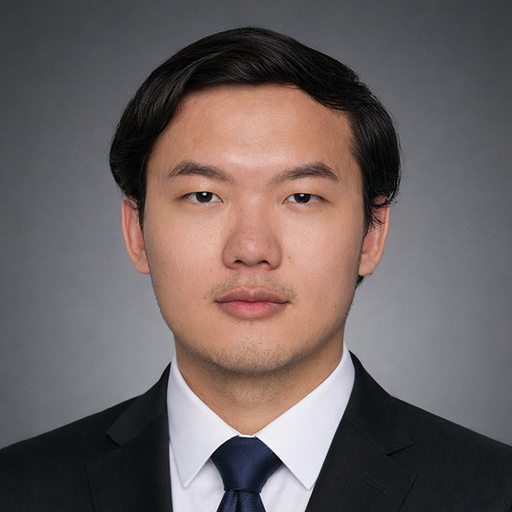
I am Qingyuan Liu (刘庆远), an incoming Ph.D. student at the College of Computing and Data Science, Nanyang Technological University, advised by Prof. Wenya Wang. Previously, I was a research assistant at the UCLA NLP Lab, advised by Prof. Violet Peng. I received my M.S. in Computer Engineering at Columbia University in the City of New York in May 2025 and B.E. in Computer Science and Technology from Huazhong University of Science and Technology in 2023. I am working closely with Jiachen Gu and Yunzhi Yao.
I study agent memory from two complementary perspectives: the internal mechanisms by which memory and reasoning are formed, represented, and used within agents, and how external memory evolves through continual interaction with environments. Learn more about my research here.
Research keywords include: Agent Memory/Reasoning, Lifelong Learning, Interpretability.
If you are interested in my research or potential collaboration, don't hesitate to drop me a message!
Warning
Problem: The current name of your GitHub Pages repository ("Solution: Please consider renaming the repository to "
http://".
However, if the current repository name is intended, you can ignore this message by removing "{% include widgets/debug_repo_name.html %}" in index.html.
Action required
Problem: The current root path of this site is "baseurl ("_config.yml.
Solution: Please set the
baseurl in _config.yml to "News
Research Highlights
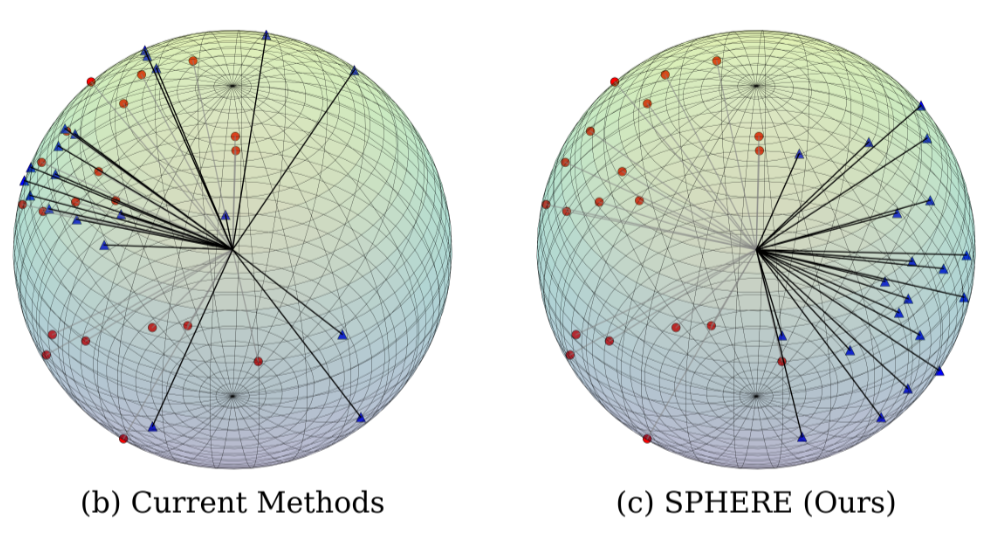
Energy-Regularized Sequential Model Editing on Hyperspheres
Qingyuan Liu*, Jiachen Gu*, Yunzhi Yao, Hong Wang, Nanyun Peng
In The Fourteenth International Conference on Learning Representations (ICLR). 2026.
Top-1.1% in Transfer/Meta/Lifelong Learning track
[TL;DR] [Paper] [NICE-Talk] [Code] [EasyEdit] [Project Page]
Developed SPHERE (Sparse Projection for Hyperspherical Energy-Regularized Editing), projecting new knowledge onto sparse hyperspherical subspaces to preserve uniformity and editing stability with rigorous proof, achieving +16.4% higher editing capability while best preserving general performance on LLaMA3-8B and Qwen2.5-7B.
# Model Editing # Knowledge Mechanisms # Lifelong Learning
Energy-Regularized Sequential Model Editing on Hyperspheres
Qingyuan Liu*, Jiachen Gu*, Yunzhi Yao, Hong Wang, Nanyun Peng
In The Fourteenth International Conference on Learning Representations (ICLR). 2026.
Top-1.1% in Transfer/Meta/Lifelong Learning track
[TL;DR] [Paper] [NICE-Talk] [Code] [EasyEdit] [Project Page]
Developed SPHERE (Sparse Projection for Hyperspherical Energy-Regularized Editing), projecting new knowledge onto sparse hyperspherical subspaces to preserve uniformity and editing stability with rigorous proof, achieving +16.4% higher editing capability while best preserving general performance on LLaMA3-8B and Qwen2.5-7B.
# Model Editing # Knowledge Mechanisms # Lifelong Learning
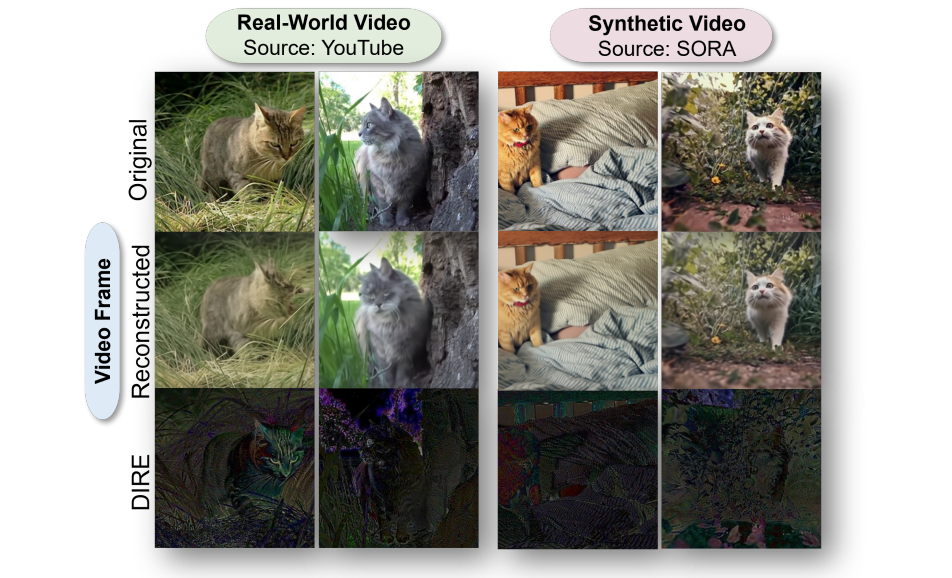
Turns Out I’m Not Real: Towards Robust Detection of AI-Generated Videos
Qingyuan Liu, Pengyuan Shi, Yun-Yun Tsai, Chengzhi Mao, Junfeng Yang
IEEE / CVF Computer Vision and Pattern Recognition Conference, GenAI Workshop. 2024
Columbia Engineering Research Highlight
Developed a Diffusion Reconstruction Error (DIRE) method for AI-generated video detection, leveraging video generation models with temporal cues to achieve up to 93.7% accuracy on Stable Video Diffusion, Sora, Pika, and Gen-2 datasets.
# AI-Synthetic
Turns Out I’m Not Real: Towards Robust Detection of AI-Generated Videos
Qingyuan Liu, Pengyuan Shi, Yun-Yun Tsai, Chengzhi Mao, Junfeng Yang
IEEE / CVF Computer Vision and Pattern Recognition Conference, GenAI Workshop. 2024
Columbia Engineering Research Highlight
Developed a Diffusion Reconstruction Error (DIRE) method for AI-generated video detection, leveraging video generation models with temporal cues to achieve up to 93.7% accuracy on Stable Video Diffusion, Sora, Pika, and Gen-2 datasets.
# AI-Synthetic